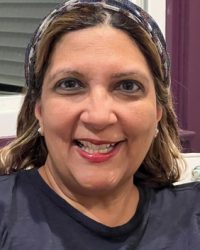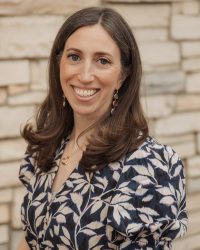

As two women whose professional and spiritual lives are rooted in public health, medicine, and Torah, we are honored to introduce this powerful issue of the JOFA Journal, dedicated to the many dimensions of women’s health in Jewish life. One of us, Mindy, approaches this work as a public health researcher, committed to understanding the systems and structures that shape our collective wellbeing and impact underserved populations. The other, Carmella, brings the dual lenses of physician and rabbi, navigating the sacred intersection of care for the body and care for the soul. Our shared experience has taught us that the Jewish imperative to protect life—u’shmartem me’od l’nafshoteikhem (“you shall guard your lives exceedingly”)—is not only about survival. It is about creating conditions in which women can live and thrive with dignity, access, and wholeness.
The articles in this issue illuminate a truth we know intimately: health is multifaceted and deeply personal, and healing is relational. Across these pages, writers explore subjects that are at once particularistic and universally resonant: mental health, disability, chronic illness, and the challenges women face in advocating for themselves within medical systems. They show us that health is not merely the absence of illness; it is emotional, communal, spiritual, ethical, and halakhic.
We hear from rabbis about how to support congregants experiencing disabilities, mental illness, and addiction, reflecting the teaching from Pirkei Avot: “The world stands on three things: Torah, service, and acts of lovingkindness.” When rabbis and communal leaders expand their capacity for compassion and presence, they strengthen all three pillars. We hear from an Orthodox woman trauma surgeon whose work brings her to moments of profound humility, and who reflects on her experience as an Orthodox Jewish woman in a demanding medical field. And we hear from women living with aphasia, Tourette syndrome, depression, and suicide—of either themselves or a family member. These pieces challenge us to widen our communal and halakhic imagination to create more inclusive, supportive spaces for all.
Several essays in this issue confront topics our community has too often relegated to silence: suicide, addiction, and eating disorders. Jewish tradition teaches: “lo ta’amod al dam re’ekha”—we are forbidden to stand idly by when another’s life is at risk. These contributors urge us not only to refrain from standing idly by, but to walk toward those who suffer and those who love those who struggle with these diseases, with tenderness, presence, compassion, and a willingness to dismantle stigma. They remind us that mental health conditions are medical conditions, and that healing becomes possible when people are met with both access to care and communal understanding.
Other writers delve into the halakhic and ethical dimensions of health, including organ donation and disability inclusion. These conversations reaffirm a core part of JOFA’s mission and of halakhah more broadly: that its ultimate purpose is to promote human flourishing and to uphold the divine image—the tzelem Elokim—of every individual. As we sing together while returning the Torah to the ark, the Torah’s paths are “paths of pleasantness, and all its ways are peace.” Halakhah must be applied with empathy, dignity, and nuance, especially when women’s bodily autonomy, agency, and safety are at stake.
Throughout this issue, we are struck by the courage it takes to tell these stories. We are equally aware of the responsibility placed on all of us who listen. Jewish tradition teaches that words can heal—marpeh lashon etz hayim (“a healing tongue is a tree of life”) (Proverbs 15:4). By speaking openly about mental health, disability, and medical advocacy, we plant seeds of healing for ourselves and for our communities.
We hope this issue offers knowledge, connection, and comfort. If you or someone you love is in need of support, please reach out to the resources provided in this issue. May it inspire each of us to help build a Jewish community where every woman’s well-being is valued, and where her body, her mind, and her voice are upheld with dignity.