
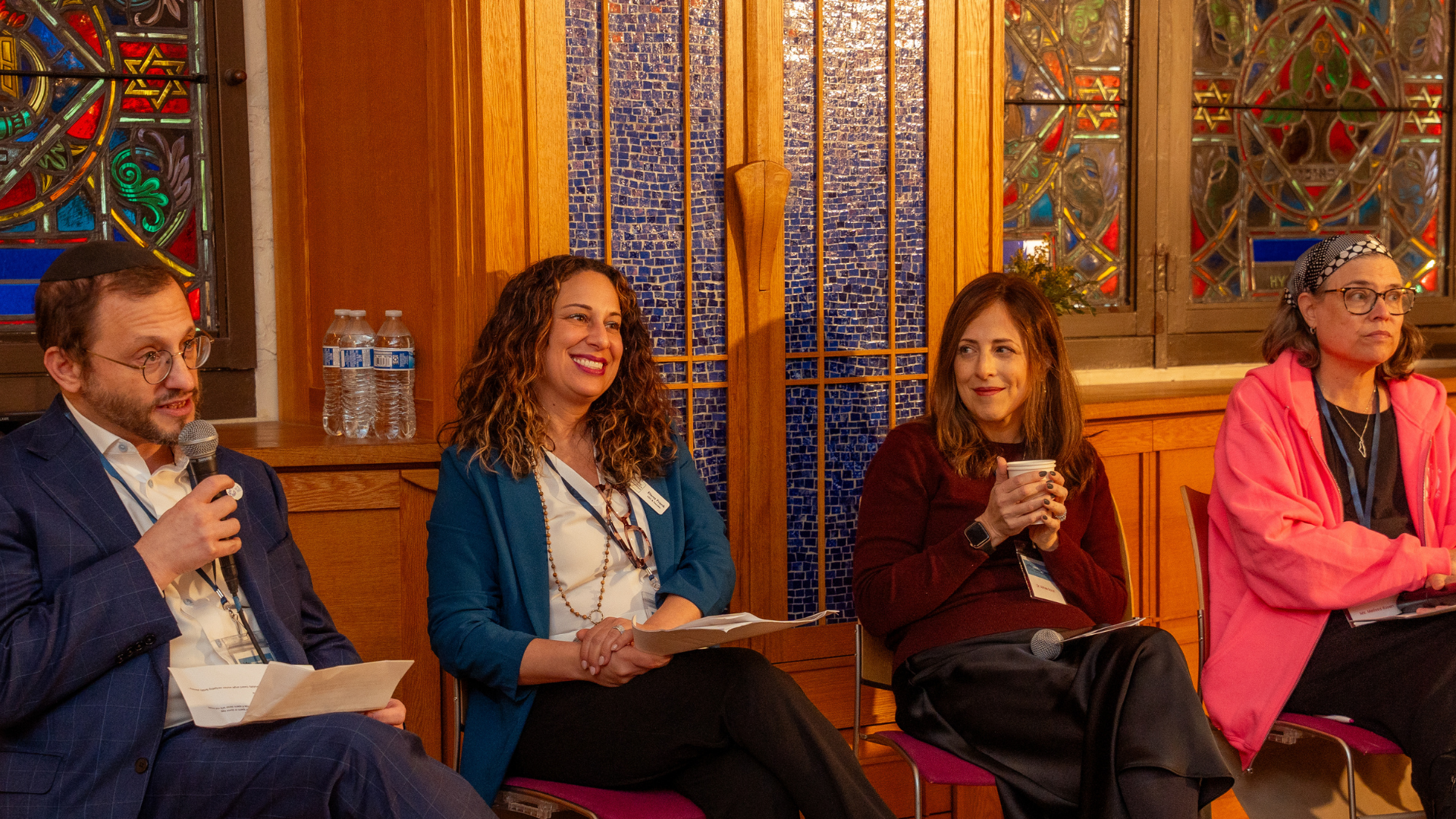
Panel:
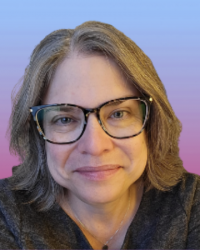
Aimee Baron, MD, FAAP, is the founder and executive director of I Was Supposed to Have a Baby, an organization that provides support and educational resources for people struggling with fertility and infant loss.
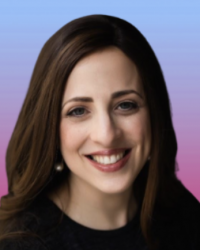
Elana Frank is the CEO & Founder of the Jewish Fertility Foundation (JFF), an organization that provides financial assistance, emotional support, and educational resources to people struggling to become parents.
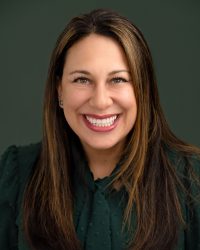
Melissa Rosen is the Director of Training and Education at Sharsheret, an organization that provides support, education, financial assistance, and genetic counseling to those faced with or at increased risk of breast or ovarian cancer.
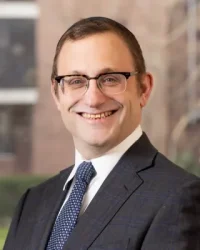
Rabbi Dov Linzer (Moderator) is the President and Rosh HaYeshiva of YCT (Yeshivat Chovevei Torah) Rabbinical School. An acclaimed Torah and halakhah scholar, he has been a leading rabbinic voice in the Modern Orthodox community for over 25 years and has published over 100 teshuvot (responsa) and scholarly Torah articles.
Rabbi Dov Linzer: This session is on navigating egg freezing, genetic testing, and fertility, with a focus on egg freezing. We will address the social, financial, and emotional issues for people struggling with fertility challenges, the halakhic issues that need to be navigated, and the role of the Jewish community in supporting people, including single women, who are dealing with fertility challenges. Each of the panelists will address her particular area of expertise, and then I will address some of the halakhic issues.
Financial Issues
Elana Frank: I always thought I was going to get married and have a million babies, but it did not go as planned for me. Luckily, I was living in Israel while I started my fertility journey. It was hard, it was stressful, but Israel is a country that really values family building. We did a lot of crazy things to get there, but ultimately we were able to have two children through IVF (in vitro fertilization) for free.
We came back to America, where I met a woman who spent $60,000 to have twins. One of my old friends said she spent a mere $20,000 to have a baby. We all shared the helplessness, the stress, the losses, but I was shocked that they also had to deal with the financial pressure.
Today, I run a multi-million dollar nonprofit. We help people on their path to parenthood in three major ways: through financial assistance, emotional support, and education. We’re a community-based organization. We’re currently in ten communities nationally, and we’re scaling rapidly. We go really deep with the communities we’re in. And we work with the full Jewish population, not just the Orthodox population.
I want to start by sharing a little bit about how to make a baby. An egg and a sperm make an embryo. An embryo plus a uterus theoretically could equal a pregnancy. It doesn’t always yield a baby, but that is what could potentially happen. It sounds simple, but once you start introducing donor sperm, donor egg, donor embryos, it can get a little complicated.
For five years after I came back to America, I was going back and forth to Israel to use up all my embryos in order to have a third baby. I had about 23 embryos in Israel, and it yielded only two children. It was so stressful. Ultimately, I received two donated embryos, and today I have a six-year-old boy from that.
Egg freezing is one of the tools that people can use on their path to parenthood. It does not guarantee a baby, but it preserves options. Women freeze their eggs for many reasons: delaying childbearing, cancer treatment, carrying BRCA 1 or BRCA 2 mutations, or being single but wanting options. The younger you freeze your eggs, the better; mid-20s is the optimal time. If you wait till your late 30s, it’s much harder.
I’m here to talk about cost. Cost is often the biggest barrier for people going through these procedures. Assisted reproductive technology in the U.S. is expensive, and many states do not mandate any sort of insurance coverage. IVF costs about $25,000. Egg freezing costs about $16,000, including medication, fees, and storage. In major cities like New York, it trends even higher.
Donor sperm costs $250 to $700. Donor eggs start at $5,000 and can go up to $30,000. But Jewish donor eggs can go up to $65,000. That’s with freezing and agency fees. Gestational carriers or surrogates can cost $125,000 to $250,000. All of these things don’t necessarily guarantee a live birth. People sometimes need to do things multiple times.
These numbers are crazy; they’re overwhelming. Jewish organizations like JFF, a local New York organization called Stardust, and Bonei Olam exist to help ease that financial burden.
Emotional Support Needs
Dr. Aimee Baron: I’m a pediatrician. I thought I would be taking care of babies for the rest of my life because I dreamed of being a doctor and loved kids. But sometimes what happens is not what you expect. For me, the unexpected was that I was having trouble getting pregnant. I married my husband after I finished medical school. We, thank God, got pregnant very quickly. I had my first child, and then I just couldn’t get pregnant for three and a half years. Nobody knew why. The doctors couldn’t figure it out. I was fine, he was fine. It just wasn’t happening.
Thank God, after fertility treatments, we had our second child. Then, for some unknown reason, that inability to get pregnant never happened again. We had our second, we had our third. We thought we’d have four, five, or six. I got pregnant again with my fourth, and then at the 16-week ultrasound, I wasn’t having cramps, I wasn’t bleeding; I was completely fine, but there was no heartbeat. The baby died. And what made it worse was that, at 16 weeks, I was already in my second trimester. I was already showing, and everybody knew I was pregnant. We had to go around telling everyone we were not pregnant.
That same scenario happened three more times in the span of two and a half years. I would get pregnant, I would get to 16 or 17 weeks, and then there was no heartbeat. The doctors could not figure it out. This was somewhere between 15 and 18 years ago, so the world was a very different place in terms of publicly speaking about fertility challenges. I was basically alone, with no support. After that second loss, I never shared that I was pregnant again because I was afraid I was going to lose the babies again. And then I did. I also quit my job because taking care of other people’s babies was just too hard. Even though I had three kids at home, it was just too much. I stopped going to shul, I stopped showing up to parent-teacher conferences and Hanukkah parties. I just retreated into myself.
My story does have a happy ending. After I quit my job, after all of those years I spent in my bed crying, after retreating from society, we kind of put it away and said, “Okay, let’s focus on the good. We have three kids. I’ll just deal with the disappointment and know that my dreams will never be realized.” We did that for a few years. Then I said, “I think I need to try again.” I got pregnant again. At the first ultrasound at eight weeks, when you’re supposed to hear the heartbeat, there were two heartbeats on the screen. I turned to my husband, and I said, “Oh, good, there’ll be two babies that die now, not one.” Because that’s trauma. Those two heartbeats are now 12 years old.
What I learned is that I really needed to do something about this. I had the tools as someone in the medical world and as someone with personal experience. I knew I could offer emotional support in a way that others couldn’t. Organizations like Bonei Olam and A Time (ATIME, A Torah Infertility Medium of Exchange), which I used, weren’t offering the emotional support I needed. So I started an organization called I Was Supposed to Have a Baby because I wanted the name to immediately convey why this is hard.
At I Was Supposed to Have a Baby, we provide support for people going through the entire spectrum of what a fertility struggle can look like: infertility, loss, donor conception, embryo donation. We hold space for people’s dreams that are unrealized—the people who are childless not by choice. These are people who are going through a tremendous amount of grief. And we provide support to every person in the Jewish community going through a fertility struggle—from frum to unaffiliated.

We’re here today to talk about egg freezing and why that is such an emotionally difficult issue. Just think about the people who are freezing their eggs; if they get to that point, it means that something hasn’t gone right. Elana said that the best time to freeze your eggs is in the mid-20s. But practically speaking, nobody’s doing that. Who has the finances to be able to do that in their 20s? So realistically, most people who are looking to freeze their eggs are coming at a much later age. Whoever that person is, they need a tremendous amount of support.
Some of these individuals will use these eggs because they hope to find a partner and have the family of their dreams. But many people will never see that happen. How do we hold all of the different choices and emotional possibilities, knowing that the outcome is not guaranteed?
If your daughter or niece is coming to you and saying, “I want to freeze my eggs,” your first response should be, “I’m here for you. What do you need? How can I support you?” Don’t assume you know what they need. For someone to get to this place, the premise is that things haven’t gone according to plan. People need to be held sensitively.
Cancer-Related Issues
Melissa Rosen: I work for an organization called Sharsheret. Sharsheret is an international nonprofit that provides culturally-nuanced psychosocial and emotional support to the members of the Jewish community who are impacted by breast cancer or ovarian cancer, and those who are living with higher diagnostic risk. We also do a lot of education in the general community about how to identify and then mitigate that risk. My perspective here today is that of “onco-fertility”—fertility as it relates to cancer diagnosis or heightened risk.
Elana mentioned that people freeze their eggs for a lot of reasons. A cancer diagnosis is one of those reasons. Onco-fertility is a really uncomfortable place to reside. People who find themselves in this world may not have a cancer diagnosis and they may not even have trouble conceiving a child, and yet they find themselves here because they carry a hereditary cancer mutation.
There are certainly cancer patients who freeze eggs before treatment begins—fertility preservation—because treatment is pretty toxic and, even if no body parts need to be removed, it may push a woman into early menopause. But what I want to focus on today is BRCA and other hereditary cancer mutations. If we took the entire island of Manhattan and tested every adult—male and female, and every ethnicity—about 1 in 400 would carry a mutation on one of their BRCA genes. For those of Ashkenazi Jewish descent, that number is 10 times the risk—1 in 40.
While the vast majority of cancers are not hereditary, only about 5 to10 percent are. For those who do carry these mutations, the risks are significant. Men and women carry these mutations in equal numbers. Carrying one of these mutations raises the risk for breast cancer, ovarian cancer, male breast cancer, prostate cancer, pancreatic cancer, melanoma, and possibly others. In the case of breast cancer, we’re talking about a risk of developing cancer of as high as 80 percent for those who carry the mutation as compared to a risk of about 12 percent for those who do not. For prostate cancer, the risk is about 30 percent for those who carry the mutation as compared to a risk of about 12 percent for those who do not. The risk for ovarian cancer is almost, but not quite, as high as that for breast cancer. But I want to be clear that while carrying the mutation raises the risk dramatically, it does not guarantee a cancer diagnosis.
Many people choose to use assisted reproductive technology to ensure that they are not passing down these mutations to the next generation. They choose to conceive via IVF with PGT (pre-implantation genetic testing) and only implant the embryos that do not carry one of those mutations. The Jewish community has been a leader on the forefront of genetic testing for prenatal mutations. Many people undergo testing before they get married or become pregnant, but these tests typically do not test for the BRCA mutations. Sometimes we hear, “Oh, I got genetic testing before I got married; they would have told me if I carried a BRCA mutation.” That is, in general, not the case. The BRCA tests are generally done separately with the support of a genetic counselor.
There is a lot of support out there for people facing a cancer diagnosis. There is not a lot of support out there for people who find themselves in this space of onco-fertility, which creates all sorts of additional traumas, guilts, and worries. Sharsheret and JFF co-host the only onco-fertility support group that I’m aware of. Onco-fertility raises so many different issues than people going through either cancer or infertility on its own.
Halakhic Issues
Rabbi Dov Linzer: I’ll share some thoughts from the halakhic perspective. My primary message here is that the challenges people face with fertility are profound enough in terms of the medical, emotional, and financial issues. Halakhah should never be a cause of additional stress or obstacles when it comes to issues of fertility.
In preparing for this, I found an article in the Israeli press about a woman who said she had waited two years to get an egg because her rabbi had told her it had to be from a Jewish donor, until finally some other rabbi told her she could take an egg from a non-Jewish donor. Halakhah should never be a source of that kind of stress or obstacle.
Just to touch on some key issues:
Supervision (Hashgaḥa): After the eggs have been extracted, do you require a shomer—a frum person—to track what is happening with the egg and sperm to make sure there is no accidental mix-up? This is an issue more generally in the area of assistive reproductive technology. It has been treated somewhat like a halakhah l’Moshe mi’Sinai (orally passed down from God to Moshe) in the rabbinic world, but it is not based on anything in the Talmud or anywhere. It is based on a reasonable concern—it matters that it’s really your child—but there’s no halakhic requirement that there be observant people watching the processing. There have been some mix-ups in the past, so you do have to take the necessary responsible care that you would anyway to make sure that it is your child. In short, if you can have a shomer and it’s not a hardship, great; but it is not a halakhic requirement.
Sperm/Egg Donors: Another issue is the source of the donated sperm and egg Surprisingly, poskim really prefer as a general rule that if the sperm donor is anonymous that it be non-Jewish sperm, because if it’s Jewish sperm, then there is a halakhic issue as to who the father is. Rav Moshe Feinstein says that’s only l’khatḥila; even with anonymous Jewish sperm, the likelihood that you’ll be marrying your sister is minuscule. And, certainly, if you know who the donor is, it can be a Jewish sperm donor, and you just have to pay attention to who his relatives are.
As far as the egg is concerned, it gets to the question of how you determine maternity if you have one person donating the egg and another person carrying the child. Poskim have different positions on this issue. The question of whether the child needs to be converted will be a function of where your posek comes out on this issue. My personal position is that it goes by the mother who carries and births the child.
For women who want to donate some of their eggs, if you believe, as I do, that maternity is determined by who carries and births the child, then there are no halakhic issues with donation. For somebody who rules motherhood is defined by whose egg it is, then the egg donor has to be aware that the child birthed from that egg is halakhically their child that is now being raised by another family. It doesn’t mean it’s not okay, but it means something has to be attended to because there are halakhic consequences.
Discarding Embryos: Many eggs are frozen and embryos created, but not all are implanted. Can you discard the additional embryos, or donate them to another couple, or donate them to science? Even Rav Moshe, who takes an extremely strict view on abortion, is concerned only once the fertilized egg is in a hospitable environment and in the womb. Poskim as a rule are totally fine with discarding embryos done in a respectful way or using them for science.
The last thing I will say is that rabbis can play an important role in supporting couples with infertility issues. Rabbis will often be the first person that people go to within the frum community, after their doctor. In addition to providing halakhic guidance, rabbis can provide pastoral and emotional support, be a listening ear, and point couples to the available resources. The most gratifying experiences I have had as a rabbi are the times when I’ve helped guide women who have gotten terrible halakhic answers, by giving them both emotional support and halakhic guidance that resulted in the birth of a healthy baby.
Egg Freezing by Single Women
Audience Question: Is there funding available for single women to freeze their eggs?
Dr. Aimee Baron: It is financially impossible for some people to freeze their eggs, so they have to reach out to organizations for funding. Bonei Olam is an absolutely incredible organization that has probably put thousands of babies into this world. About three or four years ago they started an egg-freezing program specifically for single women because the women in yeshivish communities were coming to them and saying they needed options. But their contract says if you accept money from us, you will not use this egg to become a single mother or for a same-sex couple. The funding exists, but the options are limited in that way.
JFF and some other organizations do not have that kind of limitation. We know there are single women who want to freeze their eggs but don’t want to sign such a contract because they can’t predict what their future will be and want to preserve the option of single motherhood. There is a whole community of women who have decided to become single mothers “not by choice.” We are opening up a support group specifically for them. Single motherhood is halakhically permissible. As a community, we need to understand that this is happening and that we need to be accepting and supportive.
Elana Frank: We help women regardless of their religious preferences or observance levels. But we find that funds for egg freezing are limited. Organizations are more interested in financing a “sure deal” like IVF or surrogacy, where you have a greater chance of seeing a baby sooner, because that’s what donors like. But there are ways to finance egg freezing. A woman might negotiate with a fertility clinic. There are interest-free loans and Hebrew Free Loans, and some granting organizations and pharmacies have loan programs. It’s not great if you don’t want to sign your rights away with a named organization, but there is some funding out there.
Cofertility is another amazing organization that exists today. It makes egg freezing affordable, but with a stipulation—you have to donate half of your eggs to another family.
Rabbi Dov Linzer: These organizations, A Time and Bonei Olam, are amazing and have brought so many babies into the world. They’re working within their hashkafic world, and people who give them money want to support certain things and not other things. The position that they’re taking regarding single mothers is not a halakhic one; it’s a hashkafic one. Halakhah has consistently recognized the profound need and right for a woman to have a baby. When Rachel says to Yaacov, “Give me children or else I die,” the Gemara understands that when a woman can’t have a child, she feels as if she’s dead. When Yaacov responds without sensitivity, the Gemara takes him to task: “Is this how you respond to women in anguish?”
On the YCT website we have a teshuvah by Rav David Bigman that deals with the question of providing communal funding in support of single mothers by choice. I wrote a teshuvah in response to a single woman who asked whether she could make the brakhah of l’hakhniso b’vrito shel Avraham Avinu (to bring him into the covenant of Avraham our forefather), which is typically made by the father at a bris. My answer, which is also on the YCT website, is that she could. But to me, the most important part of that teshuvah was that I didn’t comment on the facts of the case—because I believe that we have to normalize the reality of single motherhood by not problematizing it.
Genetic Testing of Donated Eggs
Audience Question: Should people who are using donated eggs get those eggs tested for the BRCA mutations?
Melissa Rosen: There are no obligations to get anything tested. However, we want to make decisions from a point of being educated. But even among people who carry the BRCA mutations, some choose to have children via IVF with PGT, and some choose to have children naturally and with their own eggs, for a variety of reasons—maybe it’s financially out of reach or maybe they believe by the time this child comes of age, there will be a cure for cancer.
Rabbi Dov Linzer: Halakhah gives a lot of latitude in terms of people’s freedom to make medical decisions. I came across a case where a woman was told by her doctors that her life was at risk if she got pregnant again, but she still wanted to get pregnant. The rabbi, quoting the pasuk where Rachel says to Yaacov, “Give me children or else I die,” said if it’s really important to her to have a child, we are not allowed to stand in her way; if she wants to take that risk, that is her choice.
Sharsheret Genetic Counselor: With respect to the question about testing eggs: You can’t test eggs for BRCA because the cell that you test gives up its life in the process. You can take cells from an embryo, but you cannot test eggs for mutations. Period.
Communal Responsibility
Rabbi Dov Linzer: What do you see as the Jewish community’s responsibility towards single women navigating fertility planning—pastorally, financially, and socially?
Elana Frank: One idea that I thought was really interesting is that shuls should create some sort of fund to help the young women in their community freeze their eggs. I think it’s the community’s responsibility. Also, I think it’s very much the mom’s—and dad’s—responsibility to talk to their children early to empower them to make their own choices in the future. Finding the right language is complicated, and parents should work with rabbis and the decision-makers in their lives to come up with appropriate language.
Dr. Aimee Baron: My thoughts center around “how can we do this better?” There are many people in your life who are single. We have such a beautiful community that does a wonderful job once you have children or are coupled up. But singles walk into the community and immediately feel othered. We need to start in our homes, even at the Shabbos table. Singles shouldn’t be sitting at the end of the table; they should be interspersed with everyone else. In our shuls, we need to pay attention to how we talk about rates for shul membership or event attendance. Instead of listing the rates per couple, we should list the rates per person. If everything is coupled, it makes single people feel unwelcome. Just simple language changes can make everyone feel welcome.
Melissa Rosen: When we talk about onco-fertility, we’re talking about married women as well as singles. We need to do a better job of training our clergy—rabbis, chaplains, yoatzot halacha—to understand the needs of what these people are going through. Sharsheret is doing this training with many rabbinical schools and rabbinic organizations. The goal is that if someone comes to the rabbi, they will know what to say, what not to say, and what resources are available—and can actually be proactive in raising potential concerns and dispelling fears about halakhic requirements.
Rabbi Dov Linzer: We very much make this part of the training at YCT. There are so many opportunities for rabbis to raise these topics in their communities. When we read the parshiot about the Emahot struggling with infertility, let rabbis dedicate one Shabbat each year around these parshiot to talk about fertility challenges. Rabbis can do so much to normalize these situations and embrace everybody in the community.
Rabbi Dov Linzer: Do you have any final thoughts?
Elana Frank: Tell three people you came to this panel today and what it was about because that sparks conversation.
Dr. Aimee Baron: You all know people who are going through this. Don’t close your eyes. Keep them open and bring those people into your lives. Envelop them and make sure they feel loved, even as they go through this process. We have an egg-freezing support group where people meet monthly to discuss it—this is no longer taboo.
Melissa Rosen: For those who are of childbearing age, if they are considering genetic testing, this would be the time to do it, so they have time to make any decisions that may be necessary.
Rabbi Dov Linzer: Thank you to all of our panel.