
Panel:
Dr. Noam Stadlan is Vice Chairman of the Department of Neurosurgery at Endeavor Health and Assistant Professor of Neurosurgery at the Pritzker School of Medicine of the University of Chicago. He also holds a Masters degree in halakhic medical ethics from New York Medical College.
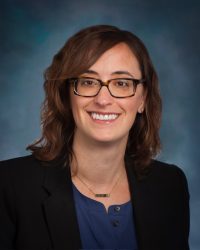
Darcy Hirsh is Vice President, Government Relations and Advocacy at National Council of Jewish Women (NCJW), where she fights for equity and justice for women, children, and families. She has over 15 years of experience in public policy, leading advocacy efforts and educating and mobilizing Jewish community members in pursuit of our shared values. She holds a J.D. from Cardozo School of Law, an M.T.S. (Master of Theological Studies) from Harvard Divinity School, and a B.A. in Religious Studies from Barnard College.
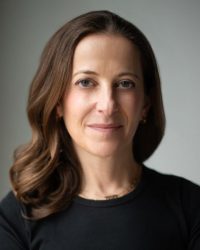
Allison Tombros Korman is the founder of the Red Tent Fund. She previously served as Senior Operations and Strategy Director at the D.C. Abortion Fund until resigning in 2023 in response to antisemitic conduct by its staff and board. She holds a Masters of Health Sciences degree from the Johns Hopkins Bloomberg School of Public Health and a B.A. in English and Women’s Studies from the University of Michigan. She has certifications in Restorative Justice Facilitation from the University of San Diego and Executive Facilitation from Georgetown University.
Paula Eiselt (Moderator) is a Primetime Emmy-nominated, Peabody and duPont-Columbia Award-winning director and Sundance Jury Prize winner. Her films, including 93Queen (HBO Max; PBS/POV), Aftershock (Sundance; Hulu/Disney+), and Under G-d (Sundance; PBS/POV Shorts), have screened at over 100 international festivals, received theatrical releases, and been distributed globally on platforms including Disney+, Hulu, HBO Max, PBS/POV, and ARTE. Her latest feature, We Met at Grossinger’s, premiered at DOC NYC 2025 and is slated for release in 2026.
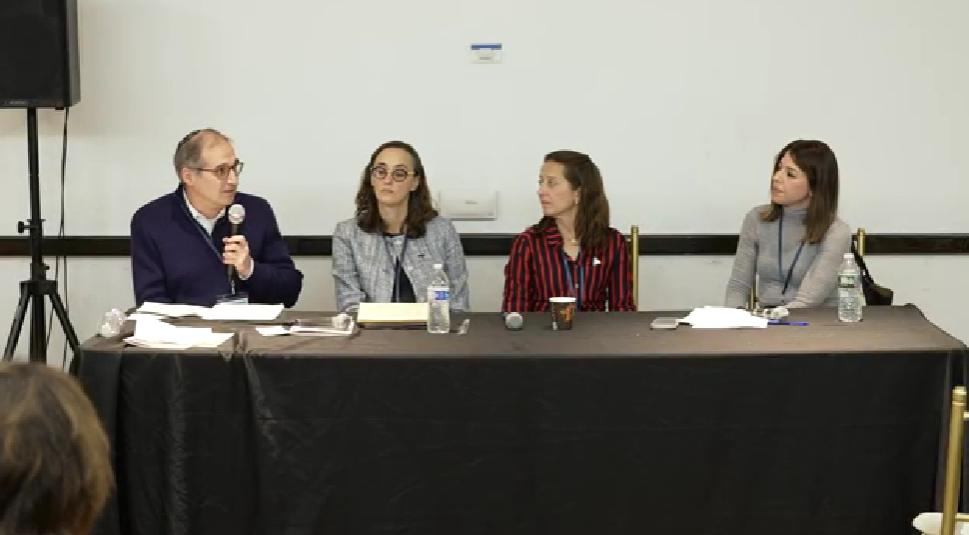
Paula Eiselt: As reproductive rights face increasing threats across the United States, Jewish advocates are confronting a dual challenge: the erosion of abortion access and the rise of antisemitism, both of which target our moral agency, religious freedom, and communal safety. We find ourselves in a very difficult moment in time both as Jews and as people who care about reproductive rights. Our panel today will speak to this crossroads that we’re at and give insight into this moment in time—what we can do and what we’re up against.
Halakhic Views on Abortion
First Dr. Noam Stadlan will talk about the halakhic views on abortion.
Dr. Noam Stadlan: Within the Orthodox community, essentially everyone agrees that abortion is mandated when the mother’s life is at risk, and everyone agrees that abortion should not be done for less than serious reasons. But there are a number of cases between these extremes, where the mother’s physical or mental health is at risk. The mental health risk is usually due to cases of mamzerut or rape or a number of fetal defects. There is a wide diversity of opinions about what halakhah says in those in-between situations.
The different opinions are highlighted in a debate between Rav Moshe Feinstein, who lived in the United States, and Rav Eliezer Waldenberg, who lived in Israel. They give different rationales for the prohibition of abortion. Rav Moshe says that abortion is essentially murder without the penalty—but it is murder. Rav Waldenberg says abortion comes under the category of ḥavalah—injury to the mother; it also might come under wasting of seed, but it’s not murder.
Each posek comes to his conclusion using halakhic methodology. But what you don’t see from reading their teshuvot is that there are other non-halakhic factors influencing them. While Rav Waldenberg was at Shaare Zedek Hospital, he saw many women whose children had birth defects. In his teshuvot, he writes very emotionally about the suffering of mothers with deformed children. Rav Moshe doesn’t even mention the suffering of the mother in some of his teshuvot.
Rav Moshe was probably influenced by the surrounding culture. In the late ‘60s and early ‘70s, there was a big culture war in the United States about abortion. And although Rav Moshe doesn’t mention Christianity specifically, a similar teshuvah by Rabbi Moshe Zweig of Antwerp prohibited abortion for fetuses with thalidomide-induced abnormalities; he wrote: “We cannot have the Divine Name profaned by a lenient ruling when the Church has unequivocally expressed its opposition to killing the fetus in this context.” While we don’t usually paskin based on what the Church says, you can see how much the milieu affected these decisions.
In our current situation in the United States, we have increasing patriarchy, Christian dominionism, and a milieu of oppression of women and minorities. The parts of our community that find those factors resonant are going to be even more repressive in their decisions and in their approaches.
We have to understand that the permissive approach of Rav Waldenberg is extraordinarily well-founded and is mainstream in many parts of the Orthodox world. We should have absolutely no compunction about stating that fact, and showing that those who are being more restrictive are probably being more influenced by outsiders than by halakhah. In addition, any law that is more restrictive than the most permissive Orthodox position is denying someone their ability and right to practice Judaism. How can Orthodox Jews want a law that prohibits other Orthodox Jews from practicing Judaism? That just makes no sense. It’s very important for us to understand that we have an extraordinarily valid—and in my opinion the best source-based—position, and that we need to be active in this situation.
Abortion Activism after October 7th
Paula Eiselt: Darcy, please talk about the work of NCJW and how NCJW fits into the abortion policy space as a Jewish women’s organization that works with many different organizations fighting for reproductive rights. Post-October 7th, where have you found yourself and the organization?
Darcy Hirsh: The National Council of Jewish Women is a 133-year-old Jewish feminist civil rights organization fighting for equity and justice for women, children, and families. We have a network of nearly 50 affiliates and 250,000 advocates around the country who we mobilize on issues related to our priorities. We’ve been involved in fighting for reproductive rights, health, and justice from the get-go. We were actually involved in the fight to establish birth control clinics in America in the 1920s, which led to the development of Planned Parenthood. We’ve really been in this fight from day one.
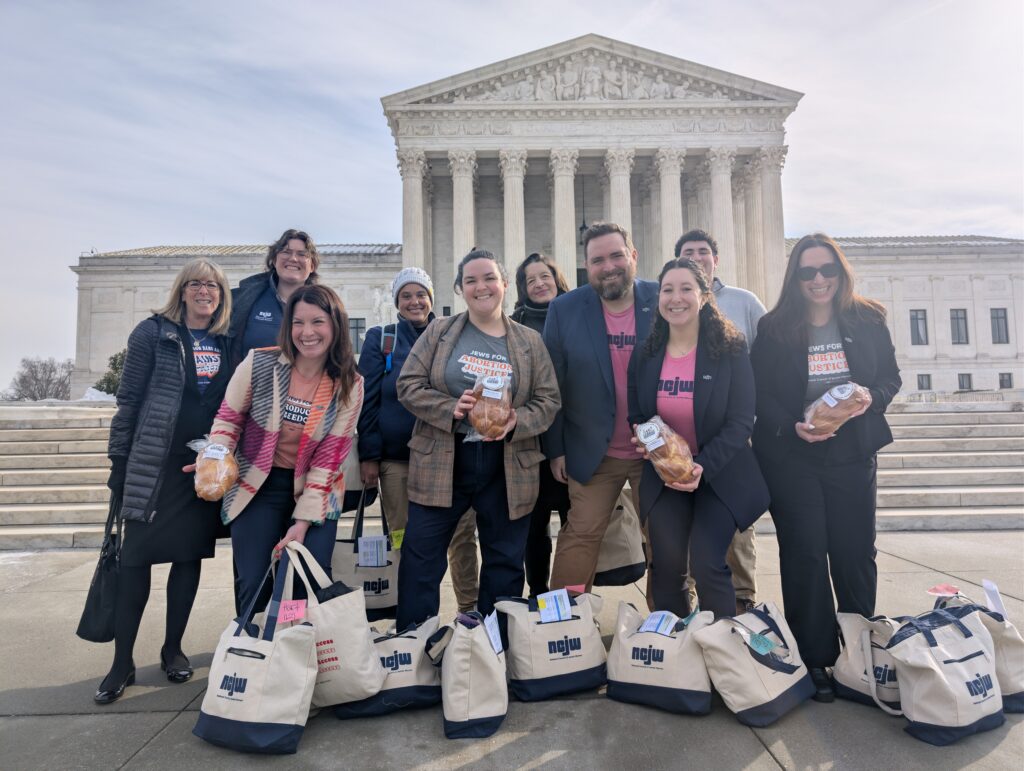
With the increased restrictions following the Supreme Court ruling in Dobbs, we have been the leading voice in the Jewish community on policy related to reproductive rights, both on the national and the state level. We’ve been fighting to push abortion ballot measures around the country. We’re fighting on Capitol Hill for a federal right to abortion access. We fight against restrictions on reproductive health access in federal law and around the country. And key to this work is our working in broad-based coalitions.
One of the things that brought me to NCJW—I’ve been here for almost two years, after a variety of Jewish organizational work—was the broad-based coalitions that we work in to accomplish all of our priorities—whether it’s fighting for democracy, fighting for immigrants, fighting for justice against discrimination, or fighting against antisemitism. And it’s because of our relationships in those coalitions that we’re able to move our shared priorities forward.
October 7th was devastating for all of the reasons that we’ve all been devastated, and, additionally, because a lot of the relationships that we had in those coalitions were laid bare to see what those relationships really meant, and to consider how we could continue to do this work. And it was hard. It’s still hard. People who had been our friends shared views that were very harmful and hurtful.
Coalition work is hard. I am privileged to work at a Jewish organization, and we have a long view of how we’re going to unite to move our policy priorities forward. I’ve been working in the economic justice space—working to end food insecurity, working for healthcare—with a variety of faith and civil rights partners who have very different views of October 7th than I do. They have said, “Do we want Zionists at the table?” I’ve been at those tables, and it’s very challenging. And we still continue to sit at those tables because, as a Jewish feminist organization, we have a really unique voice; if we step away, that voice is no longer at the table. And so it’s hard. We call people in; we have a lot of individual hard discussions. But, in order to move forward, it’s really important for us to stay at those tables.
I’ll give an example. Just last week, a colleague of mine was in a repro coalition meeting with Senator (Raphael) Warnock’s office. Senator Warnock was having a really hard time supporting an abortion access bill. And he said, “I’m having a lot of trouble with the faith angle on this.” My colleague from NCJW said, “You know, 83 percent of the Jewish community supports abortion access. At NCJW we commemorate Repro Shabbat every year when we read Parshat Mishpatim.” And she talked about the fact that, in our view, religious freedom is reproductive freedom. And his staffer said, “Thank you. That’s really helpful and that will actually help him support this legislation.” If we’re not at those tables, we’re not able to make that change.
Paula Eiselt: Allison, I would love for you to talk about the Red Tent Fund and why it came to be. Allison and I both work in progressive spaces where our Jewishness has made us outsiders.
In relation to Allison’s story, I would like to share a story of my own. When I was releasing Under G-d, it was a few weeks after October 7th. We had planned a Zoom webinar that was marketed and promoted as an interfaith program about abortion rights. I was on the panel as a filmmaker; the other panelists were Rabbi Dov Linzer, a Muslim imam, a Muslim lawyer, and two Christian leaders. We were supposed to talk about using our faith to safeguard abortion rights. And right after one of us—it was either me or Rabbi Linzer—started speaking, the Muslim lawyer said, “We really can’t talk about this unless we’re talking about what’s happening to the women in Gaza right now.” This was being live-streamed and someone said, “Yes, thank you for saying that.” It completely derailed the conversation. Obviously, that’s a different conversation that has nothing to do with U.S. abortion policy. But the fact that we were there speaking as Jewish people was enough that we had to answer for that issue.
Allison Tombros Korman: Thank you for sharing your story. This is something we see happening quite frequently in reproductive health and abortion access spaces.
I am the founder and executive director of the Red Tent Fund. We are an organization that funds abortion for all—“all” meaning any person of any religion, any political affiliation, any identity. We want to fund abortions, and we do so with funding through the Jewish community.
Speaking here next to Darcy is quite perfect because there would be no Red Tent Fund without the National Council of Jewish Women. NCJW opened the door and started the conversation about how you can talk about abortion and not just religion—but abortion and Judaism—in the same breath.
I’m a public health professional by training, and I’ve spent my entire career in sexual and reproductive health. In 2022, I took a job with the D.C. Abortion Fund, known as DCAF in the D.C. area where I live. Like most local abortion funds, they raise money through their community, and they use that money to pay for abortion procedures that are financially out of reach for so many people. I was delighted to be doing that work because I feel incredibly passionate about abortion work, and was able to help people living in or traveling into my community to get abortion care.
After October 7th, many of our lives turned upside down. I certainly did not expect my professional life to change the way it did. Almost immediately, I was singled out within the organization. I was the only Jewish staff person and there were no Jews on the board. Pretty much the entire organization—with the exception of me—felt “Well, we have to talk about what’s happening in Gaza.” And my feeling was, “No, we don’t. We’re a local abortion fund; we fund abortions in the D.C. area. What do we have to add to the conversation that the smartest minds of our generation have not been able to figure out half a world away?”
I was outvoted on this issue. Which is fine. But then I stuck my foot out again and I said, “Okay, but if we as an organization are going to say things about what is happening to the women of Gaza, how are we not also talking about rape used as a weapon of war, hostage-taking, and murdering?” And I just got “Nos” across the board.
This went on for weeks. And the longer it went on, the more entrenched it became. It became me on one side, feeling like I was being asked to speak for all Jewish people—as if we’re some kind of monolith and agree on everything, which of course we don’t—and everyone else in the organization on the other side.
I made the decision to resign from the organization. When I called my board chair to tell her that I was stepping down, she didn’t pick up the phone, and I left a message tendering my resignation. She texted me back a few hours later and said, “Well, we understand if DCAF is no longer a fit for you,” which to me said, “You’re causing a lot of trouble; get out.”
So I left. A couple of months later, I wrote about my experience in an online Jewish magazine. The outpouring of responses I got from people—not just in reproductive health, but in other progressive movements like climate change, immigration justice, and food insecurity—was staggering. So many people who were Jewish in a progressive space felt that they were being singled out or othered or being asked to answer for things that we have no control over.
And so I made the decision to start the Red Tent Fund so that people who care about domestic abortion and approaching the work through a Jewish lens have a place where they can come and do that work. We are not going to ask you about your politics on the Middle East. We are not going to ask you any type of litmus test question about why you’re here. If you are here because you believe in funding abortion in this country and you are in line with the values that we as Jews bring to this work, we would love to have you in our tent.
What We Should Be Doing Now
Paula Eiselt: What should we be doing at this moment of time when we are being challenged by both antisemitism and the lack of abortion rights in the country? And how do we keep the abortion conversation going? Because usually when any minority group is fighting for their survival or to preserve their identity, that has to be their first priority. And in many of these cases, women’s rights are the first to go. So how do we address this climate of antisemitism and eroding rights while making sure that the abortion conversation is not going to get lost in our communities?
Allison Tombros Korman: It’s a great question. Darcy and I represent two different approaches to that question. Darcy and NCJW stayed at the table in coalition with these other organizations and I’m so grateful they did; someone has to be at those tables making our voice heard. And at the same time, I think it was completely appropriate for me and others to walk away and say, “We’re going to do our thing the way we do it.”
We have seen this before—whether it’s universities or social clubs or law firms. We’ve stepped aside and made our own institutions, and have made those institutions so undeniably important in the work that they do that they continue to keep the conversation going. What’s really important to me is that: (1) we’re out here funding abortion because there has never been a more critical time to fund abortion; and (2) I don’t want us to walk away from the table wholesale and lose this space in the abortion conversation that Jews have been a part of for so long.
So I think it requires a complementary series of actions, with folks in coalition staying there, and folks like Red Tent going out and carving their own path.
Darcy Hirsh: To echo Allison, there are different tools for different times and for different organizations and people. I think the overarching takeaway is that we need to be part of the conversation in whatever way feels comfortable for us. But it’s really important that we stay in the conversation.
Here’s an example of our approach. On the one-year anniversary of October 7th, an organization in the reproductive rights space released a horrifying statement about the attack. Jofa released a statement condemning their statement, which was was extraordinarily meaningful for many in the Jewish community, and it’s really important that Jofa spoke out in that way. NCJW did not, because we are positioned differently — we work in coalition with that organization and wanted to work within the relationship we had to make change. Instead, we were able to create ground rules to make sure that we were able to work productively in coalition with them moving forward, on the issue the coalition was formed to advance: reproductive rights in the US.
Another area NCJW is working on involves the FACE Act (Freedom of Access to Clinic Entrances). This is a law that was passed in 1994, a little over 30 years ago, in the face of horrific attacks on clinics, to protect health providers and people seeking reproductive health access to clinics. NCJW was part of the coalition that worked to pass this law. The law also protects access to houses of worship. It is now being used to protect houses of worship that have been seeing violent protesters blocking access to them. But the current administration has stopped using the FACE Act to protect clinics. One of the things we’re talking about at NCJW is how we can use our understanding of this law to protect access to both houses of worship and clinics. Both of these aspects of the law reflect our Jewish values, and this is an area where we can bring a unique perspective.
Dr. Noam Stadlan: From a halakhic point of view, I think we need to educate within our community that having access to abortion in the cases that are allowed—and sometimes mandated—by halakhah is important. We need to educate as many people as possible as to what the halakhah actually is, and clear up any misconceptions. It’s also important to emphasize that these restrictive laws are impinging on our, and everybody else’s, religious freedom.
Paula Eiselt: Noam, there have been a lot of reports of antisemitism in the medical space. For example, Jewish women in the United Kingdom recently reported that they need to have a Jewish doula come to the hospital with them because they don’t trust the health care system in the UK. Are you seeing any of that?
Dr. Noam Stadlan: I personally practice in an area that’s heavily Jewish, and I see very little of that. I think that here in the United States the vast majority of medical staffs are professional, and even people who have deeply-held beliefs are constrained by that. There have been isolated incidents, but they are very few.
Questions from the Audience
Audience Question: What does halakhah permit or require in the case of abortion?
Dr. Noam Stadlan: The most commonly-quoted position is that of Rav Eliezer Waldenberg, who said abortion is permitted where there is a “great need.” “Great need” is a pretty amorphous concept. He permitted abortion where the child would have been born with Tay-Sachs and was going to die in a couple of years. He also permitted an abortion in the seventh month where the child would have been born with Down’s Syndrome. You have to remember that at the time he was writing, in the 1970s, the care and treatment of someone with Down’s Syndrome was very different than they are today. But, perhaps noting the difference in prognosis between a child with Tay-Sachs and one with Down’s Syndrome, he stated that it was necessary to obtain a heter from a Rav (as well as permission from the father) when abortion was contemplated for a fetus diagnosed with Down’s Syndrome.
But the key point, which is important today, is that he allowed abortion because of the mother’s distress. And the only person who can measure the mother’s distress is the mother herself. Similarly, if the child is a product of rape or is a mamzer, the mother might have psychological distress. And he viewed psychological distress as just as important as physical distress.
Rav Moshe Feinstein’s position was that abortion was permitted only if there’s a pretty certain risk of death to the mother. Rav Waldenberg permitted abortion even if there was a significant risk of medical problems. But his focus was on the mother.
Audience Question: When is abortion considered murder under halakhah?
Dr. Noam Stadlan: If either the head or the majority of the fetus is already out of the birth canal, then it’s considered a separate life. At this point, the mother’s life is not prioritized over the baby’s because the baby is considered to have independent life. Prior to that, Rav Moshe Feinstein would say abortion is considered murder, but there’s no murder punishment attached to it. Rav Waldenberg would say it’s not murder; it’s a different sort of prohibition.
Paula Eiselt: To add to that, as part of my research for my film Under G-d, I interviewed Rabbi Jeremy Wieder of Yeshiva University (who recently announced that he is making aliyah) and he said that Rav Moshe Feinstein’s position is a minority viewpoint. Everyone I have spoken with said it’s really up to the mother in terms of psychological distress. On a hopeful note, I have a son who is in a mainstream Modern Orthodox high school, and in his halakhah class he is learning that abortion is permissible under Jewish law.
Audience Question: The Jewish community as a whole has moved to the right, especially after October 7th. Has that affected the Jewish community’s attitude toward abortion?
Paula Eiselt: As Noam mentioned, decades ago Rav Moshe Feinstein was influenced by Christian viewpoints on abortion. I think something similar is happening within the Orthodox community today. The mainstream view in the Jewish community, which is not my view, is that the Trump administration is better for Jewish people. That attitude leads them to overlook other policies of the administration. This is especially true about abortion, where the topic is so stigmatized.
Allison Tombros Korman: I’m sure you are right that some of that is happening. I have always been amazed at the mental gymnastics people can do when it comes to things that impact their life directly, particularly abortion. If you talk to most abortion providers, they will tell you a story about someone who is outside their clinic protesting every weekend. And then one week that person is seeking an abortion in their clinic, either for themselves or for their child, and they find a way of explaining why their case is different.
Darcy Hirsh: I can’t speak to that question directly, though I’m sure you’re right. One of the things that really concerns me about the right—and it’s not just the Trump administration—is that it is legislating Christian values under the guise of religious freedom. But it’s not religious freedom for everyone; it’s religious freedom for those with a minority extremist Christian view. This goes to reproductive health access, bodily autonomy, religion in the schools. We are fighting in several states to stop the Ten Commandments from being posted in schools. When we think about a Jewish movement around abortion access and the many ways in which the administration has been good on antisemitism, we have to think about how to tie these things together.
Dr. Noam Stadlan: I think the right wing in the Orthodox community has found resonance with the right wing politically, and they interact with each other. Most people who would support a lot of what the administration is doing are against having this Jofa conference and other women’s rights things, and in favor of restrictions on abortion. I think there is unfortunately common ground between the right wing in our community and the right wing in our culture, and that’s something we have to work on.
I was talking to someone in Israel who said that within the ḥareidi and very right-wing communities, when they talk or write articles, they’re very restrictive, but when applied to specific individual cases, they are more supportive of the less restrictive position. Rabbi Jeffrey Fox, the Rosh Yeshiva of Yeshivat Maharat, was telling me that Rabbi Eliezer Melamed, who is a major Israeli posek, told him that he is moving his approach toward the less restrictive position because he is seeing the results of being more restrictive.
Audience Question: What can individuals do to support reproductive health access?
Allison Tombros Korman: There’s so much you can do, and most of it starts within your own sphere of influence. At the Red Tent, we have synagogue partners— synagogues across the country that sign on and say, “We stand behind what you’re doing.” But there’s an absence of Orthodox congregations doing that. The best way to get a synagogue to sign on is to have the pressure come from within the congregation. Whatever the denomination, it is always more successful when the congregant asks the leadership for it.
Paula Eiselt: As we all know, the vast majority of the leadership of the Orthodox community is male. There’s a lack of awareness and education about abortion and miscarriage. I think if these rabbis understood how many women in their community need abortion care to complete a miscarriage, they would think twice about opposing it.
I spoke to a rabbi early on after Dobbs, and he was convinced that if the mother’s life was at stake, the hospitals would act. We now know that’s a fiction because they’re not going to risk violating the law, and women have actually died. Rabbis need to be made aware that this is happening.
Darcy Hirsh: One of the best things you can do is around education and normalization of abortion. The more we talk about abortion, and the more rabbis and congregational leaders talk about it, the less stigma there will be. At NCJW we teach clergy how to talk about abortion and reproductive health access, and that’s an important part of our role.
Another thing I wanted to share is that there is an increasing threat of criminalization of clergy who are providing counsel to congregants about reproductive health access. Depending on the legal situation in your state, clergy could be penalized for having a conversation with somebody about what their options may be. NCJW has launched a 50-state privilege guide for clergy of all faiths, explaining what conversations with congregants are privileged, and how they can be within their legal rights.