
The following is an edited excerpt from the conference session “How to Build a Feminist Community.”
Panel:
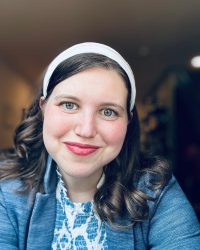
Rabbanit Bracha Jaffe is a member of the clergy team at HIR – the Bayit. She has semikha from Yeshivat Maharat, which she earned after a career in hi-tech.
Rabbanit Dasi Fruchter is the founder and spiritual leader of the South Philadelphia Shtiebel. She has semikha from Yeshivat Maharat and also holds an M.P.A. in nonprofit administration and an M.A. in Jewish Studies from NYU.
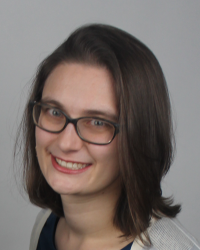
Dr. Talia Hurwich is a member of Congregation Darkhei Noam in New York. She holds a Ph.D. in Education and Jewish Studies from NYU and is currently the Director of Research and Evaluation at the Jewish Education Project.
Rabba Wendy Amsellem (Moderator) is on the faculty of Yeshivat Maharat. She has semikha from Yeshivat Maharat, is an alumna of the Drisha Scholars Circle, and has been a Wexner Graduate Fellow and a Mandel Jerusalem Fellow.
Rabba Wendy Amsellem: In our session, Rabbanit Bracha Jaffe of the Hebrew Institute of Riverdale (HIR), Rabbanit Dasi Fruchter of the South Philadelphia Shtiebel, and Talia Hurwich of Darkhei Noam will talk about how their shuls are increasing women’s participation. We’ll also talk about the challenges of increasing women’s participation and ways in which we could increase women’s participation even more.
Rabbanit Bracha Jaffe: I am the Associate Rabba at HIR. This is a position that is designated specifically for a woman. It is unusual for an Orthodox shul to do that. The shul follows the Orthodox model of the meḥitzah—women staying on their side of the meḥitzah, men on their side of the meḥitzah, and does not have men and women on the bimah at the same time when liturgy is recited.
The first thing you notice when you walk into our shul is that you can’t tell which is the women’s side of the meḥitzah and which is the men’s side based on the configuration. The meḥitzah runs down the middle, and there’s equal access to the bimah from both sides. (And by the way, there is also handicap accessibility. People in wheelchairs or with canes or walkers can also come up to the bimah.) That layout immediately signals to the women: you are important; you are just as important as the men. I want to remind everyone that while in a standard Orthodox minyan women are not counted in the ten for minyan, they are equal in importance to the eleventh man—the more people in the room, the more kavod (honor) being given to God.
At HIR, a female rabbi and a male rabbi have the same responsibilities, except where the halakhah requires differences. A woman is not counted for a minyan, a woman doesn’t lead services or read from the Torah, except when we have women’s tefillah.
We look for those spaces where there is breathing room within standard halakhah for women to both feel like they participate more as well as actually participate more. In many Orthodox shuls, you never hear a woman’s voice—certainly not on her own. There are shuls where it’s accepted that women say Kaddish, but there are also shuls where if a woman is the only one saying Kaddish, they require a man to say it with her. In our shul, you hear a woman’s voice a lot. Much of it is mine because I announce page numbers. I will announce Kaddish. I announce different things as the service goes along. That would be just one small space where a woman’s voice is heard.
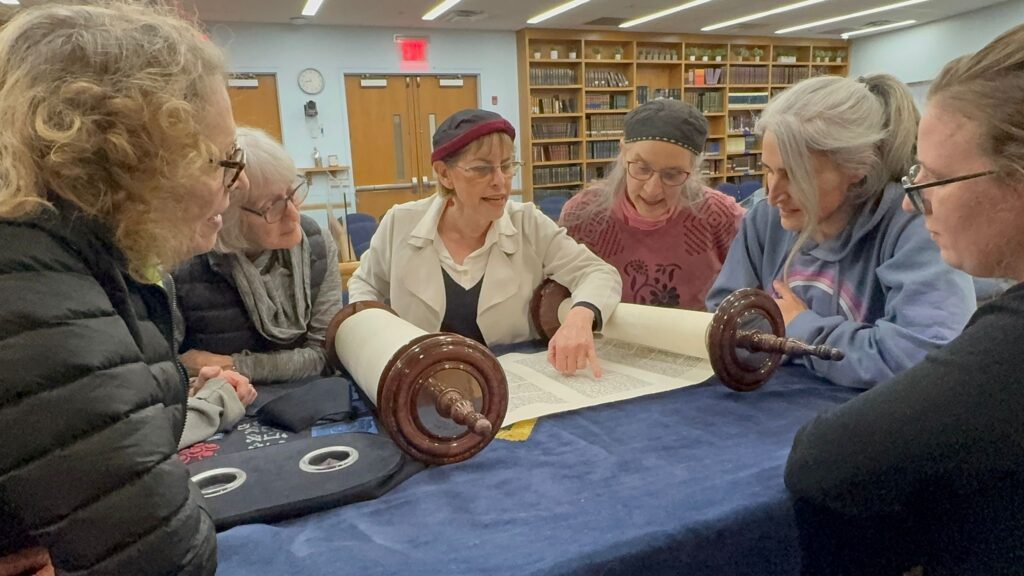
We also allow women to speak in all the places in the liturgy that do not require a minyan or a male ḥazzan to lead, such as the mi sheberach prayers. At the appropriate time, the men go down from the bimah and women come up and say the mi sheberakh prayers. This could also be done from the women’s side in a shul without accessibility to the bimah from both sides. A woman announces the molad during birkhat ha’ḥodesh (blessing of the new month).
Women give sermons. Women give divrei Torah. Women have been president of the shul. At HIR we try to incorporate women wherever the halakhah allows, if it can be done in a respectful way—not making the service feel draggy, but streamlining it so that women can seamlessly be a part of the service.
Something that we instituted a few years ago was that women return the Sefer Torah to the aron kodesh (ark). Again, because there’s accessibility from both sides of the meḥitzah, the men leave the bimah, women come up—they don’t recite the prayers for returning the Torah to the aron, but they carry the Sefer Torah, open the aron, and put the Torah away. This happens both on Shabbat and weekdays; every space that we have is equal, and we follow that custom every time.
There’s another beautiful custom that we have in our shul. When a girl has a bat mitzvah and she wants to have a women’s tefillah where she leads shaḥarit and reads all or most of the Torah portion and Haftarah, we have what we call the flipped model. The women’s tefillah is held in the main sanctuary and there’s an alternate traditional tefillah with a minyan for men and those women who want to say Kaddish. This is because women’s tefillah is not a halakhic minyan, and Kaddish requires a halakhic minyan. By flipping the model, we are signaling to the girls and their families: you are just as important as a boy who has a bar mitzvah. We work it out logistically—it takes some organization to make it work. But just the idea of asking people to switch in order to give the girl that place and that role—that’s what is so special.
Here is the guiding model of HIR: we do our best to have women really feel welcomed, wanted, and included.
Rabbanit Dasi Fruchter: I am a product of Jofa. I grew up in a world of women’s Megillah readings and the Jofa Journal. I grew up in Kemp Mill, where I saw women standing up and taking up space, and I got to create a path for myself, thanks to all the institutions that stand on the shoulders of Jofa, like the amazing Yeshivat Maharat.
My mother is particularly a role model for me in my approach toward Orthodox feminism. When I was a child, we davened at a shul in Long Beach. My father was the ḥazzan on Rosh Hashanah and Yom Kippur. There was a balcony in that shul. And guess what? My mom belted out the singing right from the balcony. I remember that women would come up to her and say, “I didn’t know I was allowed to sing. Thank you for teaching me that I could sing.”
So much of my approach to what is happening right now at the South Philadelphia Shtiebel and my prior position as the assistant spiritual leader at Beth Sholom is about singing from the balcony. What does it mean to be in the balcony and belt it out and to find roles that make sense for where we are in the Orthodox community?
At the Shtiebel we have a slightly different approach than the one described by Rabbanit Bracha. Our shul is a startup congregation that we founded six years ago with some amazing folks in response to wanting to see more women becoming solo or senior spiritual leaders. At the time, I was working in a congregation where we were making huge strides in women’s leadership, but there were real limits—what we might call a “stained glass ceiling.” Creating the Shtiebel was in part about bringing a vision of Orthodoxy and feminism into a startup space, which actually gives us a little more breathing room.
One approach that we think about is how do we understand equality. In the Orthodox world, many people who are not “frum from birth” but are seeking something in a post-denominational space that is rich and authentic will say to me, “But the meḥitzah, but the minyan—women do not have equal opportunities.” And I will say, “It’s true—though we are moving in various ways to make more room for ritual inclusion, in some ways Orthodoxy has snagged, has gotten stuck, particularly around gender.”
Because of this snag, we decided to tackle the question of inclusion in a way that feels safer in our Orthodox context. Can we reimagine what inclusion looks like outside of the lightning rod issues? Can we find ways to look at the way we do davening, and make it more inclusive for everyone—what if we need to flatten the experience of leadership and create 25 leadership roles on a Shabbat morning instead of the seven Torah readers? When you walk into the Shtiebel, you’ll find that the aron is on the women’s side. The shulḥan straddles the women’s and men’s and our modest nonbinary sections. You’ll notice that there are specific roles for women that are not given to men at all, such as anything related to carrying the Torah.
Even though there are things in Orthodoxy that probably aren’t going to change tomorrow, we need to find ways to create more voices and more inclusion. I think that it’s beyond halakhah. It’s about culture. It’s about creating a space that invites additional participation. Just one example: the Shtiebel never waits for a minyan of ten men—we have a culture that whoever is in the room is enough. Yes, it would be important to do Kaddish, Kedushah, and Barekhu should the formal requirement be satisfied. But if there are not ten men in the room and there are ten people in the room, we’re going to start davening. We’re going to take out the Torah and read it without aliyot. And we’re going to use a special adapted Kaddish for mourners that we started using during Covid. There are pulpit rabbis and rabbaniot where 20 percent of their jobs is gathering ten men in a room so there can be a minyan. And that experience of the minyan gathering can do really pernicious things to women.
One other small piece we introduced is doing Pesukei d’Zimra in a Sephardic style, around the room, with no one up at the shulḥan leading it.
When I think about building a feminist community, my approach is not to imagine taking the roles that are reserved for men and sticking women in them. I want to examine the whole ecosystem of Orthodox tefillah. We can see feminism as about introducing the experience of feeling marginalized (which, by the way, could in theory be the experience of every eleventh man) and think about what it looks like to reimagine tefillah so that everybody is engaged, and that our communities serve all people in a different, more nourishing way.
Talia Hurwich: I grew up in the Jofa world. My bat mitzvah was the second women’s tefillah in my synagogue. The first one was so that the kinks would get worked out. But my bat mitzvah and the women’s tefillah group in general generated a great deal of controversy among the community. Every women’s tefillah after my bat mitzvah was held in the social hall, not the sanctuary, despite the fact that there were two sanctuaries. And that lit a fire under me.
My participation at Darkhei Noam started because of Rabba Wendy Amsellem. I offered to leyn my bat mitzvah parsha, and Rabba Wendy reached out to me and said, “Would you also like to lead the tefillot?” I said, “I’d love to learn,” and she talked me through the Torah service. Some time later she asked, “How about Pesukei d’Zimra?” Well, I had never done that before. So she taught me Pesukei d’Zimra. From there, I became one of the gabbaiyot, and later became the women’s davening coordinator. And from there I did other things, including helping run the Zoom minyanim during Covid.
When I became the women’s davening coordinator, one of the co-chairs of the shul said, “You need to know that this job is not just about finding the women to lead Pesukei d’Zimra and the Torah service. It’s also about training.” Darkhei Noam is a partnership minyan—a halakhic congregation in which if something was not explicitly labeled for a man, we can have a woman do it. So Kedushah is led by a man, but Pesukei d’Zimra can be led by a woman. The Torah service—taking the Torah out and returning it to the aron—can be led by a woman. On the Yamim Noraim (High Holidays), musaf is really long. There are elements that men are halakhically required to lead, but there are many piyutim (liturgical poems) that are part of that service. And so we have a woman co-leading musaf on Rosh Hashanah. We have a woman co-leading Kol Nidre. Leadership in these roles doesn’t require accreditation; a woman can say, “My Hebrew is good enough. I can do this,” and she does.
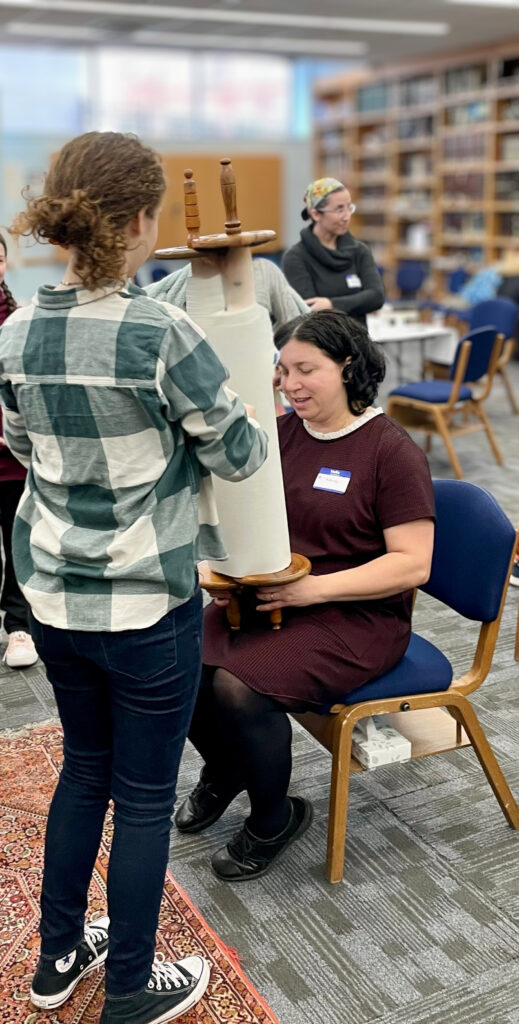
There are also smaller roles. And we need to draw women from the community to fill those roles: serving as gabba’it alongside the gabbai, doing gelilah (rolling the Torah scroll), taking an aliyah, going up to the aron kodesh and carrying a Sefer Torah through the women’s side. We have to find women to do these things every single week. And there is a lot of work that needs to be done, both individually to train people as well as communally to make sure that we have a community of volunteerism, of standing up and saying, “Sure, I can do this. I’ve never done it before, but I’ll figure it out.”
Challenges to Women’s Participation
Rabba Wendy Amsellem: It sounds like in each of your shuls there are parts of the service that you specifically want women to take on, but that sometimes women are reluctant to take them on. What do you think is behind the reluctance, and how do you go about trying to persuade women that this is really something that they might want to do?
Rabbanit Bracha Jaffe: Sometimes the biggest challenge is to have a woman agree to do it. Women are not used to being front and center. It’s rare to find a man who will say, “I don’t want an aliyah.” They consider it an honor. It is not rare to find a woman who will say, “Oh no, I can’t carry the Sefer Torah; I can’t open the aron and put it in.” Often it’s because they’re not familiar with it. So we have workshops during the week or on Shabbat to give women an opportunity to practice these honors, so they won’t feel so uncomfortable doing it “for real.” In our workshops, women can practice in a smaller and safer space where there are only women in the room. That has made a big difference. In women’s tefillah settings it also always just feels safer. We are careful about the women who perform the public speaking roles. We want women who speak Hebrew fluently, and are clear and articulate; otherwise it feels like the men know what to do but the women don’t know what to do.
When we want to introduce a new practice, we do it systematically. For example, when Rabbi Steven Exler wanted to introduce having women say Kiddush for the congregation, he first spent some time speaking about it. He had some classes where he taught that men and women have equivalent obligations in Kiddush, and that therefore a woman can make Kiddush for a man in the same way a man can make Kiddush for a woman. The problem is the cultural aspect—people are not used to it. But now you will hear a woman making Kiddush—Rabbi Exler and I alternate going up to the bimah at the end of davening and making Kiddush for the entire congregation.
I think that the reluctance to participate comes from a few places. One of them is cultural for women in general, and one of them is specific to women in Orthodox Jewish spaces. And when they come together, it’s difficult for women to break free. Being warm and encouraging is helpful. Often I hear women say, “I’ve never held a Sefer Torah before. I might drop it.” And I tell them, “I’m not a strong person and I can carry this Sefer Torah. I will be right with you every step of the way. I will show you exactly what you need to do. And if for some reason you’re uncomfortable, I can hold the Torah.” The key is helping women feel that they are important and that they have a role and a place in shul. That is done with smiles and with warmth and with finding openings and spaces to do that. And I think that’s something that unfolds over time. Anywhere you see an opportunity to do it, that’s what you do.
Rabbanit Dasi Fruchter: We have a conversion class at the Shtiebel, with 12 people in it right now, and I see a similar reluctance by both the men and the women in that class. I think the reluctance comes from a lack of Jewish literacy, a lack of familiarity with the particular roles. The way we address this is by first introducing people to smaller, less technical roles. For example, we ask people to stand in front of the room and turn the pages. This teaches them that it’s okay to stand in the front of the room, and it’s not a weird space to be in. I agree that we need an on-ramp for participation—not going from 0 to 60, but finding gentle ways where someone’s voice might be heard solo or someone’s body might be in the main space.
Talia Hurwich: I think the reluctance stems in part from perfectionism, and women are more perfectionist than men by and large. Often when you reach out to women, they say, “Maybe sometime later, but I’m not ready yet.” And my answer is, “No, you are ready. You can do this. Just go for it and in the worst-case scenario, we won’t ask you again, and you’re off the hook.” I think that one of the drivers behind perfectionism being higher with women than men stems from their Jewish tefillah education.Many Orthodox women went to day schools where tefillot were not led by them, but by boys. When boys have in their minds the memory of a peer leading Hallel with his voice cracking, that communicates pretty effectively that some degree of imperfection is okay. The point communicated to boys is the importance of stepping up when asked. Women didn’t have this experience growing up.
For me, the question is: how do you get teen girls involved and engaged, not just in their bat mitzvah? With a partnership minyan, a month after their bat mitzvah you can reach out and ask them to do gelilah or get an aliyah, and soon after, you reach out again saying, “That was awesome. Do you want to do it again?” The current women’s davening coordinator at our shul is very keen on getting these teen girls leading. And I think it’s wonderful because that’s how you start to get women to be polished, but also to be okay about not being fully polished.
The way that I often used to find women to lead is by listening to their aliyot. If a woman gets an aliyah and I hear a clear voice who sounds confident, that’s a person I reach out to. So many of us wait to be invited without stepping up on our own. It’s about observing who is doing what and who has the skills to do more.
Audience Question: If a person is in a synagogue that does not have opportunities for women’s participation, what would you suggest as a way of starting?
Rabbanit Dasi Fruchter: One way is singing. Is there a group of women who feel comfortable singing and can model that for other women? Another thing I saw when I was growing up was “Kaddish buddies”—a system of people to stand with women in their year of mourning or when they have yahrzeits to really be present and to answer their Kaddish loudly and clearly. These are smaller steps to start to hear more women in the shul space.
Rabbanit Bracha Jaffe: If women’s participation can’t happen in the shul during services, I think it’s okay and beautiful to create spaces for women outside of that. I also want to say that knowledge makes a big difference. If we teach women that women and men have the same halakhic obligation for Kiddush and therefore a woman is allowed to make Kiddush for a man, then even if she never makes Kiddush, she knows enough to respond when a man or a woman objects that she can’t make Kiddush for them. Have a learning group. Jofa has prepared wonderful brochures on these topics. You may need a facilitator or a teacher to lead such a learning group and may want to have this learning in a “women only” space for women’s comfort level.
A young woman in my community said, “We need an oneg for just women to sing because there are also spaces where only men sing.” So she created that and now we have events for just women to lift their voices together in song. Another beautiful custom in our shul: if someone has a yahrtzeit and they come to say Kaddish, we give them an opportunity to speak about the person who passed away, either at the end of shaḥarit or between minḥa and maariv. That’s not a ritual role, it’s not a liturgical role. But it creates another space to hear a woman’s voice. And the men and women have equal access to that space.
Even if they don’t have an active role in the davening, we can still empower women and help them feel part of the community and important by having spaces that are meaningful and not “dumbed down” for women. It’s important to not feel paralyzed by the limitations of your shul and end up not doing anything. Look at it differently: Where can I create spaces for women? If not in the main shul, let’s find other spaces and other locations.