
The founding generation of Orthodox feminists believed they would not see Orthodox women rabbis in their lifetimes. They sowed the seeds and dreamed dreams for their great-granddaughters.
Amazingly, in 2009, all that changed due to the courage of Rabba Sara Hurwitz, Rabbi Avi Weiss, and their team of supporters. Since the founding of Yeshivat Maharat, scores of Orthodox women have been ordained in the United States and Israel. New ordination programs for Orthodox women seem to be popping up every year, with opportunities now at Midreshet Lindenbaum, Matan, Ein HaNatziv, Yashrut, Har’el, and more.
So, have we made it?
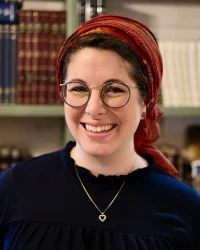
As a proud musmekhet of Yeshivat Maharat’s fifth class, I can tell you that in some ways we have. My colleagues and I hold positions that would have been out of reach to women even a generation ago. We are members of rabbinic organizations in America and Israel. We teach and lead and write. The fact that, as a child, I dreamed of becoming an Orthodox rabbi (I wrote my high school senior thesis on the subject!), and then entered an Orthodox ordination program directly out of undergraduate studies is nothing short of miraculous.
This success belongs to so many people: all the Orthodox women and men in Jewish communities all over the world who fought for women’s Torah education, synagogue leadership, and ritual inclusion, locally and institutionally. There is power in this movement. We have attained some extraordinary achievements.
Time to Do More
Now it is time for us to do more. We can imagine bigger. We have built great things, and we must keep on building. I want to suggest three interconnected future frontiers for our movement of promoting women learners and leaders in the Orthodox community.
First, although we have created scores of rabbis, we have very few Orthodox synagogues led by women. The first cohorts of Yeshivat Maharat alumnae have been in the field for almost ten years, but they have not risen to senior ranks, unless they, like Rabbanit Dasi Fruchter and Rabbi Dina Najman, have built their own communities from scratch. There are women who are trained, experienced, and qualified for senior leadership positions in synagogues. Where are the synagogues who are ready to hire women as senior rabbis? For this to happen, we need an awakening of lay leaders and synagogue board members. Is your senior rabbi approaching retirement? Now is the time to lay the groundwork so that when your synagogue next considers a senior hire, your community will be ready to consider a woman. If your community is growing, might you consider a cosenior position alongside a male senior rabbi? This model is starting to take root in other movements and finding success. It is time to try it out in ours as well.
Second, there need to be advanced post-semikhah halakhah learning opportunities for women. When it comes to rabbinic ordination, there are two levels. Currently, the institutions ordaining women are offering what is called yoreh yoreh semikhah. In conferring this degree, rabbis give written permission to their students to teach and advise in specific areas of Jewish law, such as kashrut, niddah, Shabbat, conversion, and lifecycle—areas of halakhah covered mainly in two sections of the Shulḥan Arukh called Yoreh Deah and Oraḥ Ḥayim. However, there is a second-level degree called yadin yadin, which covers the other half of the Shulḥan Arukh: Even HaEzer and Ḥoshen Mishpat. This degree confers permission to judge.
At the moment, there are no learning programs that teach these areas of halakhah to women. That’s a real shame, for two enormously significant reasons.
Why It Matters
First, when it comes to monetary damages (the material covered in Ḥoshen Mishpat), it is relatively easy to make a halakhic argument that would permit women to serve on a beit din in those cases. Unfortunately, there are no women trained or qualified to create such batei din, but the possibility of one is thrilling.
Second, and perhaps even more crucially, the areas of law covered in Even HaEzer are all about women— marriage, divorce, ḥalitzah, personal status. Whenever a beit din weighs in on these issues, women are involved, and it is almost always painful. Even in the absolute best-case scenario of a simple case and a gentle, ethical beit din, women face panels of all-male judges, often with no other women in the room. How many women walk into their Jewish divorce proceedings without any real understanding of what is entailed in the process? Just about every ḥalitzah is a tragedy, and the educational resources available to the public are somewhere between meager and nonexistent. Women rabbis trained in these areas, though they might not be able to sit on the beit din themselves, would be able to knowledgeably support women going through these processes and advocate effectively and collaboratively when needed.
There need to be advanced post-semikhah halakhah learning opportunities for women.
I am not the first person to recognize that this is a problem. Thirty years ago, Rabbi Shlomo Riskin established to’anot rabbaniyot who work within the Israeli court system, and Maharat has created a Halakhah in Action fellowship to give women the beginnings of an education in these areas. But in truth, yadin yadin semikhah takes years of intensive, full-time study, and that course of study is offered nowhere to women today.
Talmidot Hakhamim and Rashei Yeshiva
Finally, the most important frontier of all, in my opinion—and the most difficult to achieve—is the creation of talmidot ḥakhamim and rashei yeshivah. These women will have sat in yeshivah for more than ten years. They will have grown in their learning by investing their time in the most complex areas of talmudic study.
It is important to note that these areas are not to be found in a standard yoreh yoreh level semikhah curriculum. Indeed, in most traditional men’s yeshivot, what we might call a “semikhah curriculum” is something one does on the side as professionalization, perhaps in pursuit of a job, but not how a person spends his core learning hours.
You might wonder, doesn’t this sound a little bit … ḥareidi? Do we really need women who study impractical, theoretical areas of the Jewish library that do not really prepare them to serve the Jewish people?
I would argue that, in principle, no area of Torah, no matter how arcane, should be off limits to women—and if there are no institutions that teach these areas to women, then they are effectively off limits. This type of study is what will produce women who are qualified to be rashei yeshivah.
The rosh yeshivah holds a particularly powerful place in today’s Torah landscape, much more than what might meet the eye. When a layperson asks their rabbi a question, the rabbi might seek advice as to how to answer. More often than not, the first person the rabbi turns to is a rosh yeshivah. The rashei yeshivah are all men. Even women rabbis look to male rashei yeshivah for advice.
Imagine a World
Imagine a world where community rabbis were passing along their most difficult questions to women. What could be different about that world? Potentially, quite a lot. Here’s an example. We typically think that agunot are freed by the actions of a beit din. That is sometimes true, particularly when batei din manage to compel husbands to show up and give a get. But some of the most powerful methods of freeing agunot (including many of those used by the International Beit Din) can actually be effectuated by a single rabbi. The challenge is that the agunah is not truly freed unless people respect the ruling of said rabbi, for her freedom depends on communities regarding the former agunah as now truly single. But if community rabbis around the world were asking a woman their questions regularly, surely they would believe her when she declared an agunah freed as well.
This is why my teacher, Rabbi David Silber, founder and dean of the Drisha Institute for Jewish Education, often says, “When there are women rashei yeshivah, the agunah problem will be resolved.” He has put his money where his mouth is: In 2018 Drisha founded a yeshivah in Israel where women truly can sit and study advanced levels of Talmud for years and years.
But the existence of an institution alone cannot bring the necessary change. That will come when our absolute best and brightest young women are taught to believe that their time, energy, and intellect should be directed toward decades of advanced Torah study. It’s a hard sell in the Modern Orthodox community—everyone knows that the very same intellect could be deployed in much more lucrative and comfortable ways. Well-meaning parents and teachers often push girls away from Torah and toward coding or medicine out of concern for their [economic] futures. Young women need communal and peer support to see Torah as a potential future for themselves. Finding and encouraging young female talent needs to be the job of everyone in our ranks. Is there a girl in your community (or your home) who has a talent for Torah? Through small comments and encouragement, you could be the person in her life who shows her that her learning and service to the Jewish people matter. You could be the person who sends age-appropriate learning, teaching, and writing opportunities her way. You could help her develop a vision for her future self that aims at Torah excellence.
Now it is time for us to do more. We can imagine bigger. We have built great things, and we must keep on building.
Orthodox feminists have achieved so very much in the past twenty-five years. At this special anniversary, let us set our sights even higher.