Panel:
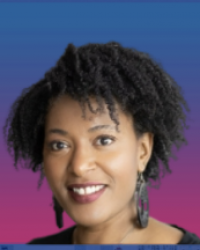
Stacey Aviva Clark is the Director of Education and Community Engagement for the Jewish Federations of North America. Over her 25-year career, she has focused on combating racism and antisemitism and fostering Black / Jewish relations.
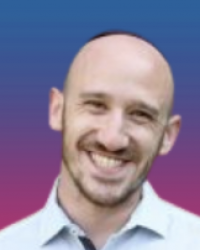
Ely Winkler is the Director of Advancement at Eshel, whose mission is to serve Orthodox LGBTQ+ Jews, their families, and communities.
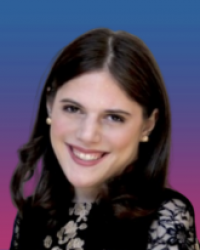
Rivka Herzfeld is a disability awareness educator and Tanakh teacher.
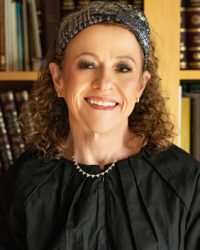
Rabbi Marianne Novak (Moderator) is a member of the Judaic Studies faculty at Akiba-Schechter Jewish Day School in Chicago, Illinois and the faculty of the Jewish Learning Collab and Melton+ and serves as the rabbinic advisor for the Skokie Women’s Tefillah Group.
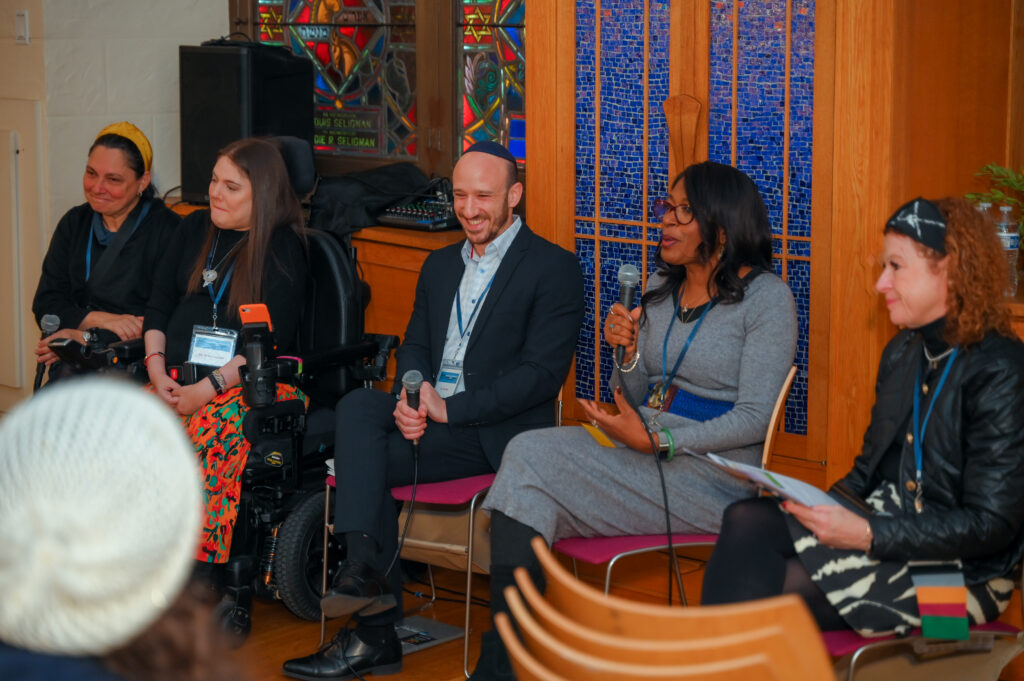
Rabbi Marianne Novak: In this session we’re going to be talking about inclusion. But what do we really mean by it? What does it look like practically in our Jewish institutions and our communities? To start, how does Torah inform your belonging? And what does “belonging” mean in a Jewish context?
Stacey Aviva Clark: I believe that Torah is the foundation of belonging. We are a disparate group of people who are very different from one another, yet connected by Torah and by this vision of having lev eḥad—one heart. One of the texts that I really appreciate is in Genesis 48 where Jacob says that God promised to make him into a “kahal amim”—a congregation of peoples. Commenting on this verse, Rabbi Samson Raphael Hirsch says that the strength of the Jewish people lies in our diversity. That’s the foundation of belonging. We’ve got to figure out how to belong together with one another when we’re all so different. It gives us an opportunity to look for the places where we fit. I often think of a mosaic. If you have a mosaic, you have all these different pieces. Separately, it’s just a big mess of pieces. But when you put them together, it makes this vibrant, beautiful picture.
Ely Winkler: For me as an LGBTQ person, the term “belonging” can mean many different things. Does it mean that you’re included? Does it mean that you’re tolerated? Does it mean that you’re fully welcome? The way the Torah informs my vision of Orthodoxy is based on a teaching by my teacher, Rabbi Steven Greenberg, one of the co-founders of Eshel: the Torah is a blueprint for our lives and no blueprint has every detail and every nuance captured. The stories in the Torah of people who advocate for themselves, such as B’not Zelophehad, the stories of those who are different speaking to their leaders and rabbis and changing the conversation throughout our Jewish peoplehood—not going against Hashem in any way, but advocating for their own difference. That’s how I see how belonging and inclusion fitting into the Jewish framework.
Rivka Herzfeld: To me, belonging means being part and parcel of the whole. It means that there’s a literal space for you when you come into the shul. It means that you’re able to get into the shul. It means that there are structural allowances, and there are no barriers for one to get in. It means that there are accessible things for people, such as accessible bathrooms. It means that there are Braille ḥumashim and siddurim if a shul can afford that. It means that there are Hebrew-English ḥumashim and siddurim. It means that there might be different minyanim, such as a slower-paced minyan or a fast-paced minyan.
A lot of people in Tanakh have disabilities, and the Tanakh does not shy away from that. Yitzḥak is blind, Yaakov has a limp because of his fight with the angel, Moshe has difficulty speaking, and Yonatan’s son Mephiboshet was lame. These are important texts that can inform Jewish belonging because our forefathers did that.
Barriers to Inclusion
Rabbi Marianne Novak: What are the barriers—structural, cultural, halakhic—that keep people from feeling that they truly belong in our communities? And what does spiritual accessibility look like? How can prayer, learning, and leadership spaces be made more open and resonant for a wider range of Jews?
Stacey Aviva Clark: Something that is really needed in our Jewish community is unity, but not uniformity—an understanding that we are all Jews and what makes us different is what adds to our Torah and our story.
Organizationally, we need to be able to take an assessment of who is in our community and who is in need. Our data tells us that people with disabilities are not being included, even with the best intentions; also Jews of color, and those with financial vulnerability. Being Jewish, especially if you’re Orthodox, can be very expensive. Do our organizations have tiered levels of participation, so that people can be engaged in Jewish life and it not be a financial burden?
Another area is how we train our volunteers and our board members and lay leaders to ask questions that open up a bridge to relationships rather than shut them down. I cannot tell you how many times someone has come up to me and asked, “How are you Jewish?” Halakhically we’re not supposed to ask people those kinds of questions. And most of the time it’s not coming from any ill will. We need to teach our members how to ask the question. If you see a Jew who looks different from you, a better question could be: “With your diverse experience, what is something that you would like to share with our broader Jewish community from your experience and from your background?” That acknowledges that I’m different in some way, but it also opens up the door to say that I have some wisdom that our greater community could understand rather than putting me on the spot to explain how I’m Jewish.
Ely Winkler: When I think about the barriers to belonging, I could rattle off dozens of halakhot that are gendered and binaried and written for the traditional heterosexual family structure. That is, of course, a tremendous barrier. But the number one barrier for our belonging is the perception that halakhah has no capability to change or find solutions, that there is no basis for us to look at the text and think about how it applies to our lives. At Eshel we are working with many rabbis who are putting together halakhot and research and guides for LGBTQ Jews to observe committed Torah lives.
From a basic spiritual accessibility standpoint within the Orthodox framework, we need to start with leadership and we need to start with allyship. When a rabbi leads a community with inclusivity and belonging, the community members follow. We have seen that from working with 300 shuls at Eshel. Rabbis can lead by having conversations about inclusivity, and by putting inclusivity information on the shul website, so people don’t have to go digging to learn a shul’s policy when they want to find a shul. I am lucky enough to belong to a shul in Brooklyn where we have LGBTQ speakers and scholars-in-residence every few weeks, and sometimes I don’t know that they’re LGBTQ because they’re not even speaking on LGBTQ topics. They are a normal part of the community, and that makes that community accessible to me because I see myself there.
We are blessed to be living in a world where we are now having conversations about moving forward, about removing the barriers, and building better spaces. Those conversations help take down some of those barriers.
Rivka Herzfeld: Some of the barriers are actual physical barriers. If there is no doorstop in a door that opens outward, then I can’t open it by myself in my motorized wheelchair. I love the pasuk at the end of parshat Yitro that says, “Do not step up to my altar with stairs, so that you don’t let your nakedness show.” In those days, there were ramps that were installed in the mishkan and in the mikdash, making it an accessible space. Today, there are shuls where people do not have access to the Torah or to the aron because of stairs, but that’s something that can be easily remedied. Somebody who had a stroke and who now has a limp, or who is elderly and uses a cane, or who is using a wheelchair should be able to get up to the Torah and feel part of the community.
To me, spiritual accessibility is very simple because we all have a direct spiritual connection to Hashem. In theory, I don’t need a Jewish communal space to be physically accessible, because I can just speak to the Master of the Universe in my own way, any time I want. However, we are a community and we do things as a community, and that makes accessibility important.
Creating “Belonging”
Rabbi Marianne Novak: How might we expand our definition of community so that we can include everyone? A recent study found that 20 to 25 percent of people who want to participate in Jewish life feel there’s no place for them, and concluded that institutions need to be working together to redefine community, perhaps under some umbrella organization. What might such an expanded definition of community look like for Jewish institutions?
Stacey Aviva Clark: From a Federation viewpoint, we want to be co-creators with the broader community on belonging. Belonging is something that is dynamic—it’s always evolving. We have to be in conversation with one another and be continually asking, “Is this working? What’s not working?” Getting feedback from people. We also need to know what one another is doing. We have to break the silos. We just convened a belonging summit earlier in the year, so that we can understand what pieces each institution is doing well, where we can collaborate, and how we can support the institutions in the things they are doing well rather than reinvent the wheel.
In the Jewish community, you can tell what we care about by where our dollars go. There needs to be a line item in the budget for belonging. It needs to touch every aspect of the organization. It’s got to be so foundational that the organization feels like we can’t do what we’re doing without this element.
Ely Winkler: To understand LGBTQ belonging in Orthodox spaces, it takes a little bit of understanding of Eshel’s journey and the work we have done. It was never enough just to say, “Are you LGBTQ-friendly?” Eshel began its work first to push back and reframe the conversation around what LGBTQ meant in Orthodox spaces. The way for us to ensure belonging is to start with one-on-one conversations—to sit down with somebody and explain to them what an LGBTQ person feels like when they come into shul and why it doesn’t feel comfortable.
Belonging is not about tolerance. Even the term “inclusivity” has felt a little shortchanged for us in recent years. “Inclusivity” has felt to me like the rabbi running up to me and saying, “Oh, hi. I’m so glad you’re here. Come sit down in my shul”—but he doesn’t do that for anybody else. Belonging is having LGBTQ people being brought into the shul by the leadership that I don’t even know about. It’s about a community looking to the needs of its congregants and responding to those needs without the congregants having to constantly step up and advocate for themselves.
One of the ways Eshel is working to increase belonging is ally training. We’ve worked with rabbis, but now the work of inclusion has to come from the entire community. We’re training people, primarily parents and friends of LGBTQ people, to speak up when they hear someone using derogatory language and to advocate to their rabbis and teachers.
Rivka Herzfeld: I’m trying to help make Jewish communal spaces accessible. And it’s exceptionally difficult. People look at me, a young woman who has a disability, and they say, “Oh, but we don’t have that in our shul.” People don’t consider that there might be a person who breaks a leg or an elderly person or somebody who is pregnant. Some of the simplest things are a Shabbat elevator or a ramp. Because the women’s section in my shul was not accessible, I have had to sit in what was essentially a corral that was made for me in the men’s section, which is not a lovely feeling. I think people need to understand that having a disability is not something we chose. Why don’t you make the space comfortable for everybody? Make it so that people can get into the shul and sit next to their peers and not be cordoned off to the side. The solutions are much easier than one would think. In my shul there was a Shabbat elevator but there was still a step leading to the women’s section. When I pointed out that the space was still not accessible to me, I was told that it would cost thousands of dollars to level the whole platform, and I said, “Well, why don’t we just gradate the step?” And it was done by the next Shabbat. It’s very simple to do if one has the motivation and is mindful about making the space accessible for all.
Next Steps
Rabbi Marianne Novak: What are the steps, individual or institutional, that we can take to move beyond the idea of “inclusion” to “belonging” as a lived reality?
Stacey Aviva Clark: To start with, we have to stop making belonging “for” others and “giving” people a seat at the table. We have to help them to actually set the table. Let’s ask people who need that belonging to say what that should look like; help us design a new table. In the Center for Jewish Belonging, we have created a fellowship where we work with local Federations to build a partnership between professional and lay people to define what is needed in their community and come up with a plan to build it—not something that has been designed for the community, but something that’s been designed with the community.
Ely Winkler: When Eshel started its work 15 years ago, I don’t think anyone could have envisioned where we’d be today. We were founded on a need to support LGBTQ people and give them hope. Today we’re not meeting people for support—we’re supporting people to thrive. We’re seeing more LGBTQ smaḥot, families being built, children and babies being born. When it comes to what’s next, I think about a story Rabbi Greenberg tells about a young couple he married. He said, “Great, you’ve done it. You’re a frum gay married couple, mazal tov.” And they looked at him and said, “Rabbi Greenberg, we need a shul. We need someone to help us have kids. We need a school that’s going to accept our kids. We need a summer camp.” That’s what’s next. We’ve been starting to work with more day schools and more camps, but there’s still a lot of work to be done.
Rivka Herzfeld: The “next steps” to help the community don’t necessarily have to be steps. They can be accessible spaces. They can be pathways that allow for everybody to join—somebody with a cane, somebody with a walker, somebody in a wheelchair, somebody with a tremor, a mother with a stroller, a father with a stroller. The pathways forward are going beyond shuls, going beyond schools. I love the mitzvah of tevillat keilim (immersing new vessels in a keilim mikveh). But I can’t do it because it’s inaccessible to me; there is a literal step to get up to the keilim mikveh in my town. We need to find ways to make sure that everyone is able to participate in all Jewish communal spaces.
Ely Winkler: The focus on families in most shuls is very difficult for many LGBTQ people. Family memberships, memberships of same-sex couples, memberships of parents with children—everyone is still figuring it out. Too few people are actually trying to build an inclusive model and too many are trying to put a band-aid on something that should have been built in from the top.
Rivka Herzfeld: In addition to designing curricula about inclusion, we need to consider who is doing the teaching. I wanted to be a Tanakh teacher. I have an M.A. in Tanakh from Yeshiva University. I had multiple interviews in different schools across the religious divide and within the Orthodox community, and nobody could find a place for me. That is incredibly disheartening because it means we’re not teaching our children that there are people who look like me and that they can still be contributing members of society.
I’ve tried hard to make disability not scary to people. I want them to know I’m not so different from everybody else; I just have to go about things in a different way. I’m not “special needs”—my needs are special. I think we have done a good job at helping the developmentally disabled Jewish community. Now it’s time to recognize that the Jewish community is getting older and people are having more babies, and we need to make spaces that can accommodate that in a real way.
Rabbi Marianne Novak: Accessibility for one includes accessibility for everyone. It doesn’t make the space “special;” it makes it greater, stronger, and holier. When we come in with the mindset that inclusion is not the “extra,” but the necessary piece in order to create communities, that mindset allows us to do so much more.